Abuse

Abuse in a nursing home refers to any intentional or negligent act that causes harm or distress to residents, encompassing various forms such as physical, emotional, sexual, and financial abuse.

Nursing home abuse happens when caregivers harm or neglect residents in long-term care facilities. Cases of nursing home abuse can include both intentional and unintentional harm. Abuse can result in trauma, medical emergencies, and even death.

Neglect

Nursing home neglect is a form of inadequate care where residents do not receive the necessary support, leading to physical harm, illness, or emotional distress.

Examples of neglect in nursing homes include: 

Failing to call a doctor or nurse for treatment when needed

Ignoring a resident’s injuries or illnesses (bedsores, infections, etc.)

Leaving residents with mobility issues in their room for extended periods

Neglecting to bathe or change a resident’s clothes or bedding regularly

Withholding food or water, leading to nutritional deficiencies

Injuries

A nursing home injury is any type of physical harm that an elderly person suffers while staying at a long-term care facility.

As people age the risk of certain injuries, like falls and severe infections, increases. To reduce the risk of accidental injury, families may place their loved one in a nursing home, so they have round-the-clock care.

However, seniors can still suffer serious injuries in nursing homes. In far too many cases, these injuries stem from nursing home abuse. Abuse can leave seniors traumatized, permanently disabled, or worse.

Common nursing home injuries include bedrail injuries, bedsores, broken bones, concussions, falls, infections, and spinal injuries.

Bedsores

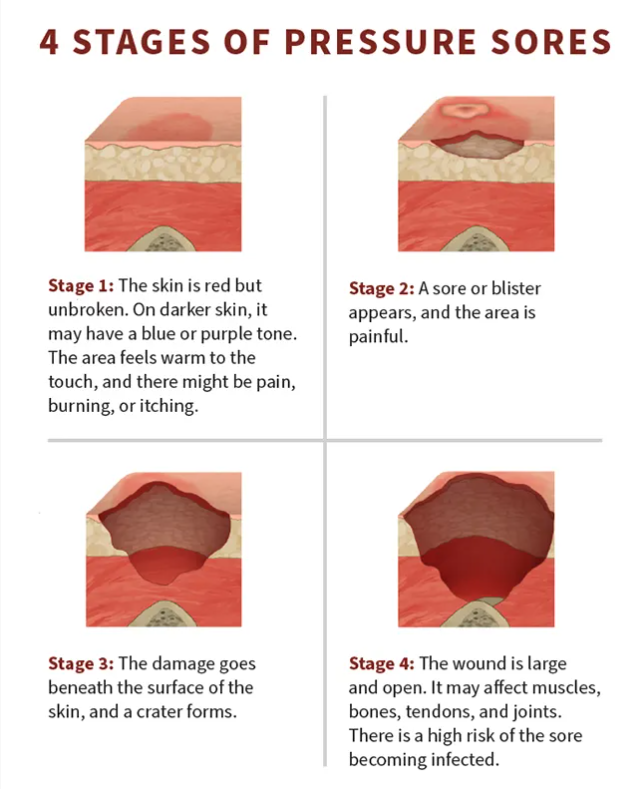
Bedsores are categorized into 4 stages.